

In 30 seconds
Evidence: The legitimate herbal ingredients in these products have low side-effect rates at standard doses; the greater risk is undeclared pharmaceutical ingredients in unregulated products.
Timing: Interactions with hidden or declared sildenafil can occur within hours of a single dose, unlike the weeks-long timelines used in herbal ingredient trials.
Next step: Always tell your GP or pharmacist about any supplements you take, especially alongside prescribed medicines such as nitrates or blood pressure treatment.
The biggest safety risk with male enhancement pills is not the side effects of the legitimate herbal ingredients listed on the label — it is what is on the label that is not declared. Between 2021 and 2025 the MHRA seized 19.5 million illegal erectile dysfunction pills in the UK, with £45 million worth of illegal medicines confiscated in 2025 alone (GOV.UK, 2026). A 2018 JAMA Network Open analysis of 776 adulterated dietary supplements found 45.5% were sexual-enhancement products, and 47% of those contained undeclared sildenafil or its analogues (Tucker et al., 2018).
This UK guide covers two distinct safety conversations that are usually conflated: the genuine, well-documented side effects of common supplement ingredients at clinical doses, and the far more serious adulteration risks from unregulated products. The first is mostly minor and predictable. The second is where men have ended up in A&E. Knowing which is which — and how to spot the difference before buying — is the practical safety question. For deeper context, see our evidence review of herbal supplements for men, the Shilajit guide, and the Tongkat Ali guide.
- At standard supplement doses, the legitimate herbal ingredients have generally low side-effect rates: mild GI upset, headache, occasional insomnia (Korean ginseng).
- The real danger is hidden pharmaceutical ingredients — 45.5% of FDA-tainted supplements were sexual-enhancement products, 47% contained undeclared sildenafil (Tucker et al., 2018)
- MHRA seized 19.5 million illegal ED pills in the UK 2021–2025; £45m confiscated in 2025 alone (GOV.UK)
- The most dangerous interaction is nitrates + sildenafil (declared or hidden) — can cause life-threatening blood pressure drops
- Men over 40 face the highest risk because they are most likely to be on warfarin, statins, BP medication, or PDE5 inhibitors — the medication classes that interact
- Six-point safety filter: GMP certification, third-party CoA, transparent dose label, MHRA-aligned ingredient list, UK-registered seller, no proprietary blends
How Safe Are Herbal Supplements for Men at Standard Doses?
At supplement doses tested in published clinical trials, the seven most-used men’s health ingredients (Zinc, Tongkat Ali, Korean Ginseng, Maca, L-Arginine, Shilajit, Horny Goat Weed) generally have low rates of clinically significant adverse events. A systematic review of 44 RCTs covering 3,092 participants for ginseng alone reported no serious adverse events at clinical doses, with mild side effects (hot flashes, insomnia, dyspepsia) at rates within 1–2 percentage points of placebo (Kim et al., 2015). Tongkat Ali at 100–400mg/day has been studied for up to 9 months without serious adverse events (George & Henkel, 2014).
“Generally low” does not mean zero. The two variables that move side-effect risk meaningfully upward are individual susceptibility (existing conditions, age, body weight) and drug interactions. Men over 40 are more likely to be on prescription medication, which is why the wider supplement-safety picture in this demographic is dominated by interactions, not herbal toxicity.
Side Effects by Ingredient: What the Evidence Shows
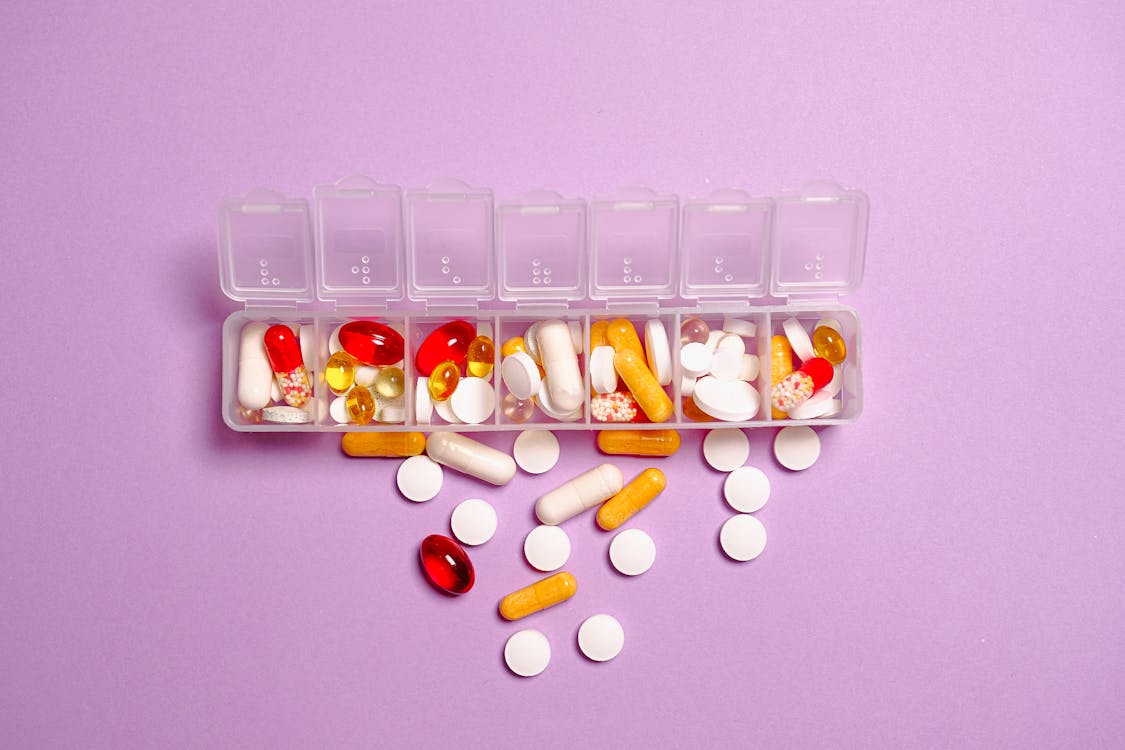
1. Zinc
At the EFSA-aligned 10mg/day dose, side effects are uncommon. Higher doses (40mg+/day) over weeks can deplete copper, cause nausea, and reduce immune function paradoxically. Zinc gluconate or zinc citrate (Blue Power uses zinc as part of a balanced formula at 10mg, 100% NRV) is well tolerated. Long-term very-high-dose zinc >100mg/day has been linked to prostate concerns and is not appropriate for daily use.
2. Tongkat Ali
At 100–400mg/day of standardised hot-water extract, mild and uncommon side effects: nausea, abdominal discomfort, occasional headaches, and restlessness or insomnia if taken late in the day (the cortisol-modulating effect drives this). Rare cases of liver injury have been documented, predominantly in bodybuilders using high-dose or unverified products (NCBI LiverTox NBK609015). The 2021 EFSA novel-food assessment flagged genotoxicity in rats at 2,000mg/kg — roughly 700× clinical doses — but human data at 100–400mg/day shows acceptable safety. The wider safety profile is in our Tongkat Ali UK guide.
3. Korean Ginseng
Most commonly reported: insomnia (1.2% vs 0.7% placebo), followed by headache, mild hypertension, and occasional digestive upset (PubMed 12020172). The drug-interaction picture is the more important conversation: Korean ginseng can reduce warfarin’s effectiveness (clot risk), interact with MAOIs, and potentiate the blood-sugar-lowering effect of metformin and other diabetes medications (PMC6035379). Full ingredient profile in our Korean Ginseng benefits guide.
4. Maca Root
At 1,500–3,000mg/day (the doses used in published trials), maca has one of the cleanest safety profiles among the seven ingredients, with mild GI upset the most common side effect. There are no significant drug interactions documented at standard supplement doses.
5. L-Arginine
Common side effects include stomach pain, bloating, and diarrhoea. L-arginine can reactivate herpes simplex virus in susceptible individuals (cold sores or genital herpes). The most important safety signal is the blood-pressure interaction: L-arginine should not be combined with nitrate medications (GTN spray, isosorbide mononitrate) or PDE5 inhibitors (sildenafil, tadalafil) due to additive vasodilation that can drop blood pressure dangerously low (Mayo Clinic).
6. Shilajit
Purified shilajit at 250–500mg/day has a clean safety profile across published trials: a 2024 systematic review of 15 clinical studies covering 1,254 participants found no serious adverse events. The risks are concentrated in raw / unpurified shilajit: mycotoxin and heavy-metal contamination is documented in untested products. Always buy purified, third-party-tested shilajit. Detail in our Shilajit UK guide.
7. Horny Goat Weed
Despite the lack of strong human RCT evidence for efficacy, side-effect data from clinical use is broadly mild — nausea, dizziness, dry mouth, and rare cases of arrhythmia at very high doses. The bigger concern is product adulteration: horny goat weed products have been found among FDA-flagged adulterated supplements containing undeclared sildenafil.
Drug Interactions: The Risks Men Over 40 Need to Know
Drug interactions are where the supplement-safety conversation moves from minor to potentially serious. The interactions to flag with a GP or pharmacist before stacking herbal supplements:
| Medication class | Supplement to flag | Mechanism / risk |
|---|---|---|
| Nitrates (GTN spray, isosorbide mononitrate) | L-Arginine, Horny Goat Weed (icariin), any product with declared or undeclared sildenafil | Additive vasodilation — life-threatening BP drop. Critical |
| PDE5 inhibitors (Viagra, Cialis, Eropid) | L-Arginine, Horny Goat Weed, ginseng (mild) | Additive vasodilation — dose adjustment usually managed via pharmacist |
| Anticoagulants (warfarin) | Korean Ginseng, high-dose omega-3 | Ginseng may reduce warfarin effectiveness; omega-3 may increase bleeding risk |
| Diabetes medication (metformin, sulfonylureas, insulin) | Korean Ginseng, L-Arginine, Maca | Compounds glucose-lowering effect; risk of hypoglycaemia |
| Blood-pressure medication (ACE inhibitors, beta-blockers) | L-Arginine, Magnesium, Korean Ginseng | Compounds BP-lowering effect; risk of dizziness, falls |
| MAOI antidepressants | Korean Ginseng | Documented interactions — serotonin syndrome risk |
| Statins, isoniazid, valproate, methotrexate | Tongkat Ali, Fadogia (if unverified), high-dose botanicals | Cumulative liver-stress risk — baseline LFTs recommended |
The Hidden Ingredient Problem: What Is Really in Some Male Enhancement Products
This is where the safety conversation gets serious. The 2018 JAMA Network Open analysis of FDA enforcement data found 776 adulterated dietary supplements between 2007 and 2016, with 45.5% (353 products) marketed for sexual enhancement. The most commonly hidden pharmaceutical ingredient was sildenafil, found in 47% of tainted sexual products. Over 20% of tainted products contained more than one undeclared drug (Tucker et al., 2018).
Where the Safety Data Comes From: Funding & Independence
All major data sources cited in this safety guide are independent of the supplement industry:
| Source | Type | Origin | Status |
|---|---|---|---|
| MHRA seizures (2021–2025) | UK government enforcement | GOV.UK / MHRA | Independent (UK gov) |
| Tucker 2018 (tainted supplements) | JAMA Network Open analysis | FDA enforcement data | Independent |
| NEJM 2015 (supplement ED visits) | National surveillance | US CDC / FDA | Independent |
| Mayo Clinic L-arginine entry | Clinical reference | Academic medical centre | Independent |
| NCBI LiverTox | NIH-curated reference | US National Library of Medicine | Independent |
| EFSA Tongkat Ali novel food (2021) | EU regulatory | EFSA NDA Panel | Independent |
| Kim 2015 (ginseng safety review) | Systematic review | Academic, no industry sponsor | Independent |
In the US, dietary supplements as a category cause an estimated 23,005 emergency department visits and 2,154 hospitalisations per year (Geller et al., NEJM, 2015). The single most dangerous pattern in male-enhancement-specific ED visits is a man on nitrate medication unknowingly taking a “natural” supplement that secretly contains sildenafil — the resulting BP drop can be life-threatening.
Editorial note — the most dangerous side effect is the one not on the label: The clinically documented side effects of legitimate ingredients at standard doses are largely manageable for most men. The supplement-safety failures that put men in A&E almost all share a single feature: a hidden pharmaceutical that the consumer did not know they were taking, interacting with a medication they were already on. This is why GMP certification, third-party Certificates of Analysis, MHRA-aligned labelling, and dose transparency are not bureaucratic boxes — they are the structural defences that screen out the products responsible for the worst outcomes.
— Blue Power Research Team, reviewing the Tucker 2018 JAMA Network Open and MHRA 2026 enforcement dataHow to Spot a Risky Product Before You Buy
Six red flags that tell you a supplement belongs to the high-risk side of the category:
- Claims that match prescription medicines (“works in 30 minutes”, “hours of hardness”, “harder than Viagra”) — food supplements legally cannot claim PDE5 inhibitor effects. If they do, hidden sildenafil is the usual reason
- No UK-registered company name or address on the website or label — the MHRA 2026 enforcement report identified marketplace and offshore sellers as the dominant source of seized product
- Proprietary “blends” hiding individual ingredient amounts — if the dose is hidden, comparison with the trial dose (and detection of adulteration) is harder
- No third-party Certificate of Analysis available on request — CoAs covering identity, heavy metals, microbial, and pharmaceutical adulterants are the structural defence here
- Marketplace listing (Amazon Marketplace, eBay, social-media direct sellers) without verifiable seller credentials
- Unrealistic pricing — standardised ingredients have a real cost. Products at 30–50% below the credible market price are often either underdosed or adulterated
How to Choose a Safe Male Enhancement Supplement: 6-Point Checklist
| # | What to check | Why it matters |
|---|---|---|
| 1 | UK or EU GMP certification | Independent confirmation that the manufacturer follows Good Manufacturing Practice |
| 2 | Third-party Certificate of Analysis (CoA) | Heavy metals, microbial, identity, and pharmaceutical adulterant screen |
| 3 | Transparent label — per-ingredient mg, no proprietary blend | Lets you compare to RCT dose and identify potential interactions |
| 4 | UK-registered company with real address and accountable returns policy | The MHRA enforcement targets marketplace and offshore listings |
| 5 | Standardisation % of botanicals (eurycomanone, ginsenosides, fulvic acid) | Without standardisation, neither efficacy nor safety can be benchmarked |
| 6 | No medicinal claims on the label | Any product marketed as a substitute for prescription ED medicine is either an unlicensed medicine or adulterated — food supplements cannot legally make prescription-drug-equivalent claims |
Why Does Blue Power’s Open-Dose Format Reduce These Risks?
Blue Power: Built on Transparency, Not Marketing
The structural reason Blue Power can be a daily-use supplement for men over 40 is the same reason it does not cause the safety problems associated with the broader category. Three deliberate design choices:
- UK manufactured, GMP certified — subject to UK Good Manufacturing Practice rather than offshore production where MHRA enforcement does not reach
- Open-dose label, no proprietary blends — every ingredient milligram is visible, so a GP or pharmacist can review the full stack against your current medication in seconds
- Standardisation transparent on the label — for Shilajit and Korean Ginseng, the active-compound percentage is specified, not just an extract ratio
- No medicinal claims — Blue Power is a food supplement, not a medicine, and is not marketed as a substitute for sildenafil or any prescription product. If you need on-demand vascular support, a pharmacist-supervised PDE5 inhibitor is the right route
Full formula: Oat extract (Avena sativa) 10:1 50mg · Shilajit 50mg · Maca Root 50mg · Korean Ginseng 5:1 100mg · L-Arginine 50mg · Zinc 10mg · Vitamin C 80mg · GMP certified, UK manufactured, third-party tested.
Try Blue Power — Transparent, GMP Certified, UK Made
Seven ingredients, open-dose label, third-party tested. Designed for daily use within a fully visible safety profile.
Get Blue Power — Free UK DeliveryNo subscription required · 30-day supply · Free standard UK delivery
Frequently Asked Questions About Male Enhancement Side Effects
Are male enhancement supplements safe?
At clinical doses, the legitimate herbal ingredients (Zinc, Tongkat Ali, Korean Ginseng, Maca, L-Arginine, Shilajit, Horny Goat Weed) generally have low rates of clinically significant adverse events. The structural risks are drug interactions (particularly with nitrates, anticoagulants, and diabetes medication) and adulteration of unverified products with hidden pharmaceutical drugs. Safety depends almost entirely on which product you buy and from whom.
What are the most common side effects of herbal supplements for men?
Across the seven most-used men’s health ingredients, the commonly reported side effects are gastrointestinal (nausea, bloating, diarrhoea), headache, and skin reactions. Specific ingredients add: insomnia (Korean ginseng), copper depletion at high zinc doses, BP changes (L-arginine), and herpes reactivation in susceptible individuals (L-arginine). At standard supplement doses, most men experience no side effects.
Can male enhancement pills cause heart attacks or strokes?
Legitimate herbal ingredients at standard doses are not associated with heart attacks or strokes. The dangerous pattern is hidden sildenafil in unregulated products combined with nitrate medications — this can cause life-threatening blood pressure drops. Men on cardiovascular medication should never take male-enhancement supplements without GP clearance, and should avoid marketplace or offshore products entirely.
Can I take male enhancement supplements with my prescription medication?
Sometimes, but always check with your GP or pharmacist first. The most important interactions to flag: nitrates (GTN spray) with anything affecting blood flow, warfarin with Korean ginseng, diabetes medication with ginseng or L-arginine, BP medication with L-arginine or magnesium, MAOIs with ginseng. The pharmacist consultation that comes with PDE5 inhibitors like Eropid is the appropriate moment to declare your full supplement list.
How can I tell if a male enhancement supplement is fake or unsafe?
Six red flags: medicinal claims (“works in 30 minutes”), no UK-registered company address, proprietary blends hiding individual ingredient amounts, no third-party Certificate of Analysis, marketplace-only listings (Amazon Marketplace, eBay, social media), and unrealistic pricing. The MHRA seized 19.5 million illegal ED pills in the UK between 2021 and 2025, with 47% of tainted sexual-enhancement supplements containing undeclared sildenafil (Tucker et al., 2018).
What should I do if I have a side effect from a supplement?
Stop taking the product immediately. For severe symptoms (chest pain, shortness of breath, severe BP drop, fainting, vision loss, prolonged erection), seek urgent medical attention — A&E or 999. For non-emergency reactions, contact your GP or NHS 111. Report the suspected adverse reaction via the MHRA Yellow Card Scheme. Keep the product packaging — identity testing of suspected adulterated supplements depends on having the original product available.
The Bottom Line: How to Stay Safe with Male Enhancement Supplements
At standard supplement doses, the legitimate herbal ingredients used in men’s health products carry generally low rates of clinically significant side effects. The category’s real safety story is not in the well-studied ingredients on the label — it is in the hidden pharmaceuticals in unregulated products, and in the drug interactions that men over 40 are particularly exposed to. The MHRA’s 19.5 million pill seizures and the JAMA-documented 45.5% rate of adulteration in sexual-enhancement supplements are the structural backdrop to every safety decision.
The practical safety filter is consistent and easy to apply: UK or EU GMP certification, a third-party Certificate of Analysis, transparent per-ingredient milligram labelling, a UK-registered company with a real address, standardisation percentages on botanicals, and no medicinal claims. A product that meets all six is in a different safety bracket from a marketplace listing without any of them.
For men taking prescription medication — particularly nitrates, anticoagulants, BP medication, or PDE5 inhibitors — the most important supplement-safety habit is the simplest: take the full ingredient list to your GP or pharmacist before adding anything to your stack. The five-minute conversation prevents almost every supplement-related emergency presentation that ends up at A&E.
References & Sources (expand)
- Tucker J et al. (2018). Unapproved Pharmaceutical Ingredients Included in Dietary Supplements Associated With US FDA Warnings. JAMA Network Open 1(6):e183337. PMC6324457
- MHRA / GOV.UK (February 2026). 20 million illegal erectile dysfunction pills seized. gov.uk
- Geller AI et al. (2015). Emergency department visits for adverse events related to dietary supplements. NEJM 373(16):1531–40. PubMed 26465986
- Mayo Clinic. L-arginine drug interactions and warnings. mayoclinic.org
- Kim YS et al. (2015). Safety analysis of Panax ginseng in randomized clinical trials: a systematic review. Medicines. PMC5533164
- NCBI LiverTox. Tongkat Ali entry — possible rare cause of liver injury. NBK609015
- EFSA NDA Panel (2021). Safety of an aqueous extract from the roots of Eurycoma longifolia as a novel food. EFSA Journal 19(12):6937. PubMed 34987621
- George A & Henkel R (2014). Phytoandrogenic properties of Eurycoma longifolia. Andrologia. PubMed 24386995
- Pandit S et al. (2016). Clinical evaluation of purified Shilajit on testosterone levels. Andrologia. PubMed 26395129
- Coon JT & Ernst E (2002). Panax ginseng: a systematic review of adverse effects and drug interactions. Drug Safety. PubMed 12020172
- Ginseng-warfarin pharmacology review. J Pharmacy Practice. PMC6035379
- MHRA Yellow Card Scheme. Suspected adverse reactions to medicines or supplements. yellowcard.mhra.gov.uk
0 comments