

In 30 seconds
Evidence: Zinc contributes to the maintenance of normal testosterone levels in the blood. Vitamin C contributes to the reduction of tiredness and fatigue. The formula lists 7 ingredients and their exact doses, with no proprietary blends.
Timing: Botanical ingredients are included for their traditional profile and reflect ordinary, individual biology, not a promised timeframe.
Next step: See Blue Power's fully disclosed 7-ingredient formula, with every dose listed, on the formula page.
If you are going to take a men’s supplement every day, you should know exactly what is in it and why. This article does something most supplement marketing avoids: it goes through the Blue Power formula one ingredient at a time, explains what each one actually is, and is straight about the difference between traditional use, research findings, and the handful of claims that are genuinely permitted under UK law. There are seven ingredients in the formula — five botanical and amino-acid ingredients and two nutrients — and we describe each of them on its own terms.
One thing to be honest about from the start. Under UK food law, the only claims a supplement may legally make are the authorised nutrient claims on the GB Nutrition and Health Claims Register. In this formula, those apply to two ingredients only — zinc and vitamin C. The other five ingredients are included for their long traditional profiles and the research that exists on each, but they do not carry authorised health claims, so we will not pretend they do. That honesty is the whole point of this page.
- The formula contains 7 ingredients: Oat extract (Avena sativa), Shilajit, Maca Root, Korean Ginseng, L-Arginine, Zinc and Vitamin C.
- Five are botanical or amino-acid ingredients included for their traditional profiles and individual research; none carries an authorised UK health claim.
- Two are nutrients with authorised EFSA/GB Register claims: zinc and vitamin C.
- The only authorised testosterone claim that may be stated is for the nutrient zinc: Zinc contributes to the maintenance of normal testosterone levels in the blood.
- Vitamin C carries an authorised claim: Vitamin C contributes to the reduction of tiredness and fatigue.
- UK manufactured, GMP certified, with fully transparent dosing — no proprietary blends.
Each ingredient below follows the same pattern: what it is, how it has traditionally been used, and — where relevant — what individual research studies have reported, described as study-level findings rather than promises. Research findings about an ingredient at the doses studied in a trial are not the same as a benefit you can expect from a finished tablet, and we flag that distinction throughout.
1. Oat extract (Avena sativa)
Oat extract (Avena sativa), also known as wild oat or oat straw, comes from the common cereal oat plant grown across temperate regions, including the UK. The green tops and straw of the plant have a long history of traditional use in European herbal practice as an everyday botanical. In supplements it is usually supplied as a concentrated extract — in this formula a standardised 10:1 extract, meaning ten parts of the raw oat plant are concentrated into one part of extract.
Oat (Avena sativa) is one of the most widely eaten plants in the world and is generally well tolerated as a food. It is included in the formula for its traditional botanical profile rather than for any specific effect; under UK food law no authorised health claim applies to it, so we make none.
The above describes oat (Avena sativa) as a traditional botanical ingredient. It is not a health claim and does not transfer any benefit to a finished product.
2. Shilajit
Shilajit is a sticky, tar-like substance that seeps from rock layers in mountain ranges such as the Himalayas and Altai, formed over centuries from compressed plant matter. Its best-studied components are fulvic acid (a naturally occurring organic compound) and a range of trace minerals. In Ayurvedic tradition it has been used as a general tonic for stamina; in supplements it is typically a purified extract standardised to a stated fulvic acid percentage.
On research, most of the published human work on Shilajit is small. In a 2016 study (Pandit et al., n=75), a purified Shilajit extract was studied in men over 90 days, with the authors reporting changes in certain blood markers versus baseline at the dose studied. As with every botanical here, that is an ingredient-level finding. Our standalone Shilajit guide covers the evidence and the sourcing pitfalls in full.
These are research observations about the Shilajit ingredient at the dose studied, not product claims, and they do not transfer to any finished supplement.
3. Maca Root
Maca Root (Lepidium meyenii) is a root vegetable in the brassica family — a relative of the radish — grown at high altitude in the Peruvian Andes. It has been eaten as a food and used as a traditional tonic by Andean communities for centuries, often dried and milled into a powder. In supplements it appears as dried root powder or a concentrated extract, in red, yellow or black varieties.
Maca has been the subject of several small human trials. In a 2016 randomised trial (Gonzales-Arimborgo et al.), a standardised Maca preparation was studied in adults over 12 weeks, with the authors reporting changes in certain self-reported wellbeing scores at the dose studied. Again, this is a study-level finding about the root, not a benefit attributed to any tablet. See our dedicated Maca Root guide for the wider picture.
The Maca research above is reported at the ingredient level, at the dose used in the cited trial. It is not a product claim and does not apply to any finished supplement.
4. Korean Ginseng
Korean Ginseng (Panax ginseng), often sold as red ginseng when steamed and dried, is one of the oldest herbs in East Asian tradition. The root is the part used, and its characteristic compounds are ginsenosides — a family of plant molecules unique to the Panax genus. Traditionally it was taken as a restorative tonic; in supplements it is usually a standardised root extract stating a ginsenoside percentage.
Korean Ginseng has a relatively large research literature for a botanical. In a 2002 study (Hong et al., n=45), a Korean red ginseng preparation was studied in men over eight weeks, with the authors reporting changes in self-reported questionnaire scores versus placebo at the dose studied. That is a research finding about the ginseng extract, not a promise from a product. Our full Korean Ginseng article goes through the studies and the safety notes.
These are study-level findings about the Korean Ginseng ingredient at the dose studied, not health claims, and they do not transfer to any finished product.
5. L-Arginine
L-Arginine is an amino acid — a building block of protein — that the body also uses to make nitric oxide, a signalling molecule produced naturally in the lining of blood vessels. It is found in food in nuts, meat and fish, and is sold as an isolated amino acid supplement, often at gram-level daily intakes. Because it is a nutrient the body makes and uses, it is described as an amino acid rather than a herb.
L-Arginine has been studied in many small trials across different settings. In a 1999 study (Chen et al.), oral L-arginine was studied in men over several weeks, with the authors reporting changes in self-reported outcomes at the dose used. We are deliberately careful here: this is a study-level observation about the amino acid, not a statement that the ingredient or the formula does anything to blood flow or circulation. Our separate L-Arginine guide explains the nitric oxide background and where the evidence is strong and weak.
The L-Arginine research above is reported at the ingredient level, at the dose studied. It is not a health claim and does not transfer to any finished supplement.
6. Zinc
Zinc is an essential dietary mineral — your body cannot make it, so it must come from food such as meat, shellfish, seeds and pulses. It is involved in hundreds of enzyme reactions throughout the body. Unlike the botanicals above, zinc is a nutrient with authorised health claims on the GB Nutrition and Health Claims Register, which means specific, regulator-approved wording may be stated.
The two authorised zinc claims most relevant here are stated verbatim below, exactly as authorised:
Zinc contributes to normal fertility and reproduction.
These are authorised claims for the nutrient zinc, valid when a product provides a meaningful amount of zinc against the daily reference intake. They are the only testosterone and fertility statements permitted anywhere on this page, and they apply to zinc as a nutrient — not to the botanicals and not to the formula as a marketing whole. Our standalone note on zinc explains the EFSA position in more detail.
7. Vitamin C
Vitamin C (ascorbic acid) is an essential vitamin found in fruit and vegetables such as citrus, peppers and berries. The body cannot make it, so it must come from the diet. Like zinc, it is a nutrient with authorised health claims on the GB Register, so specific approved wording may be stated.
The relevant authorised vitamin C claim is quoted verbatim below:
This is an authorised claim for the nutrient vitamin C, valid when a product provides a meaningful amount against the daily reference intake. It describes what the vitamin does as a nutrient, separately from every other ingredient in the formula.
How to Take It, and Who It’s For
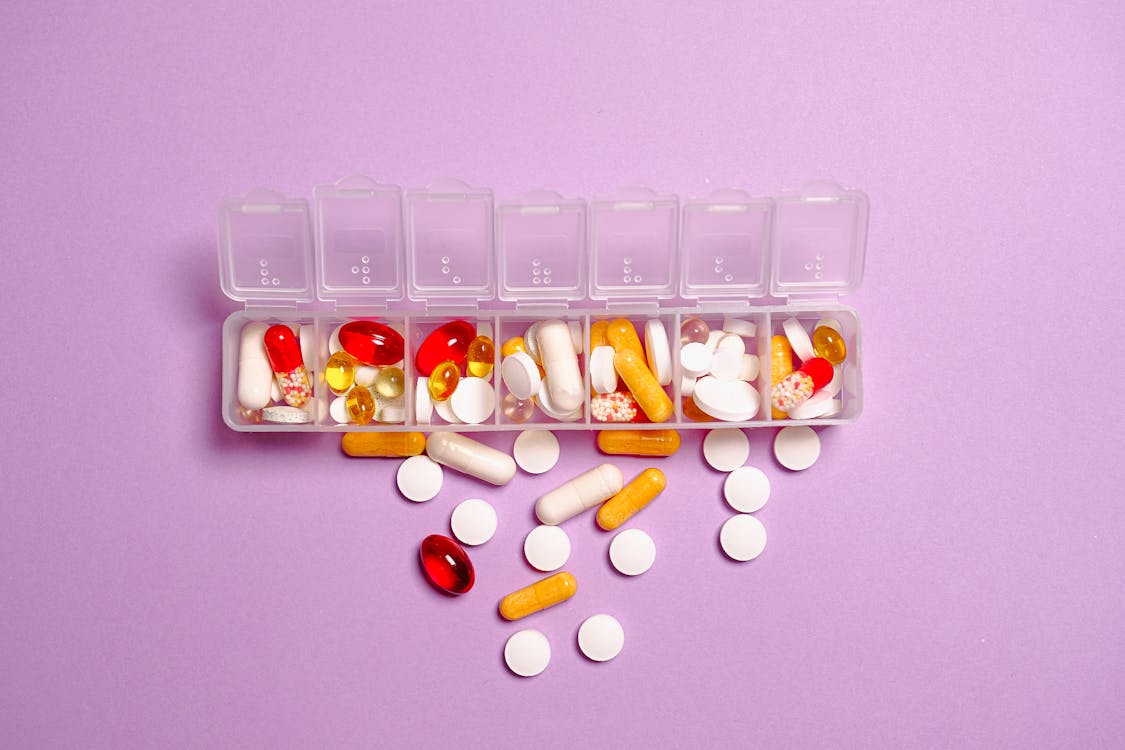
The formula is taken as one tablet a day, usually with food and a glass of water. There is no loading phase and no complicated protocol. The dose of each ingredient is printed on the label rather than hidden inside a proprietary blend, so you can see exactly how much of each you are getting and compare it with the amounts used in research.
- Anyone taking prescription medication, particularly blood-pressure or blood-thinning medicines (L-arginine and several herbs can interact).
- Anyone with a diagnosed medical condition, or who is due to have surgery.
- Men with hormone-sensitive conditions, given some of the herbs’ traditional reputations and incomplete safety data.
- Not suitable for under-18s, or for pregnant or breastfeeding women.
The Blue Power Formula at a Glance
Seven ingredients, UK manufactured and GMP certified, with the dose of each ingredient stated openly on the label:
- Oat extract (Avena sativa), Shilajit, Maca Root, Korean Ginseng and L-Arginine — botanicals included for their traditional profiles and individual research.
- Zinc and Vitamin C — nutrients with authorised GB Register / EFSA claims.
The two authorised nutrient claims that apply to this formula are:
- Zinc contributes to the maintenance of normal testosterone levels in the blood.
- Vitamin C contributes to the reduction of tiredness and fatigue.
These are authorised claims for the named nutrients. The botanical ingredients are included for their individual profiles and do not carry authorised health claims.
See the Full Label and Dosing
Seven ingredients, every dose printed openly — no proprietary blends. UK manufactured and GMP certified.
See Blue Power — Free UK DeliveryNo subscription required · 30-day supply · Free standard UK delivery
| Approach | Typical UK cost / month | Items per day |
|---|---|---|
| Six to eight single ingredients from Boots / Holland & Barrett | £50–£120 | 4–8 |
| Blue Power — one daily tablet, 7 ingredients | £19.99 | 1 |
Retail prices vary; figures are indicative of single-ingredient UK high-street pricing.
Stacking with vitamin D. Blue Power focuses on circulatory and everyday-wellbeing ingredients and does not contain vitamin D. Between October and March in the UK, the NHS advises adults to consider a daily 10 µg (400 IU) vitamin D supplement. If you want vitamin D cover, take a separate D3 capsule with a morning meal alongside your daily tablet, ideally after checking your level with your GP.
Reporting side effects. Food supplements are generally well tolerated, but if you notice an unexpected reaction to any supplement you can report it to the UK regulator through the MHRA Yellow Card Scheme. Always tell your GP or pharmacist about supplements you take, especially alongside prescription medicines.
| Study | Type | Funding / Source | Status |
|---|---|---|---|
| Pandit 2016 (Shilajit) | Clinical evaluation, healthy volunteers | Not disclosed in article | Not disclosed |
| Gonzales-Arimborgo 2016 (Maca) | Human study of black/red Maca extracts | Not disclosed in article | Not disclosed |
| Hong 2002 (Korean red ginseng) | Double-blind crossover study | Not disclosed in article | Not disclosed |
| Chen 1999 (L-arginine) | Human study, high-dose oral L-arginine | Not disclosed in article | Not disclosed |
Editorial note — how to read the ingredient studies: Several botanicals in this formula have at least one human study behind them — Pandit on Shilajit, Hong on Korean red ginseng, Chen on L-arginine — but these are small, single trials rather than replicated bodies of evidence. A positive result in one short study tells you an ingredient was worth investigating; it does not mean a finished supplement inherits that outcome. Under GB rules only the zinc and vitamin C nutrient claims are authorised here, so the herbal results stay as research context. Read each trial as a dosed, provisional starting point, not a promise.
— Blue Power Research Team, reviewing Pandit et al. 2016Frequently Asked Questions About the Blue Power Ingredients
What ingredients are in Blue Power?
Blue Power contains seven ingredients: Oat extract (Avena sativa), Shilajit, Maca Root, Korean Ginseng, L-Arginine, Zinc and Vitamin C. Five are botanicals included for their traditional profiles and individual research; two — zinc and vitamin C — are nutrients with authorised GB Register / EFSA claims. The dose of each ingredient is printed on the label rather than hidden in a proprietary blend.
Which Blue Power ingredients have authorised health claims?
Under UK food law, only the nutrients carry authorised claims. In this formula that means zinc and vitamin C. For example: “Zinc contributes to the maintenance of normal testosterone levels in the blood.” and “Vitamin C contributes to the reduction of tiredness and fatigue.” The other five ingredients are included for their traditional profiles and the research that exists on each, but they do not carry authorised health claims.
Why does the formula include botanicals if they have no authorised claims?
Many of these botanicals — Shilajit, Oat extract (Avena sativa), Maca and Korean Ginseng — have long histories of traditional use and a body of research at the ingredient level. UK law simply does not allow a supplement to state a health benefit for a botanical without an authorised claim, so we describe each one honestly as a traditional ingredient with study-level research, and reserve the authorised wording for zinc and vitamin C.
How do I take Blue Power?
Take it with food and a glass of water, following the directions on the label. There is no loading phase. It is a food supplement, not a substitute for a varied and balanced diet and a healthy lifestyle.
Is Blue Power a medicine?
No. Blue Power is a food supplement, not a medicine. It is not intended to diagnose, treat, cure or prevent any disease. If you take prescription medication or have a medical condition, speak to your GP before using it.
Where can I read about each ingredient in detail?
We publish a separate, standalone guide for each ingredient, including Shilajit, Maca Root, Korean Ginseng, L-Arginine and zinc. Each covers what the research does and does not show.
The Bottom Line
The Blue Power formula is seven ingredients: five botanicals — Oat extract (Avena sativa), Shilajit, Maca Root, Korean Ginseng and L-Arginine — chosen for their traditional profiles and individual research, and two nutrients, zinc and vitamin C, that carry authorised GB Register claims. We have gone through each one separately and on its own terms, because that is the honest way to describe a supplement.
Under UK law, a food supplement’s lawful health claims are the authorised nutrient claims — here, those for zinc and vitamin C. The botanicals are included for their long histories of use and the research that exists on each, not because the law lets us promise an outcome. If you value knowing exactly what you are taking and why, the most useful thing you can do is read the per-ingredient guides linked above and check the full label before you decide.
References & Sources (expand)
- Pandit S et al. (2016). Clinical evaluation of purified Shilajit on testosterone levels in healthy volunteers. Andrologia 48(5):570–75. PubMed 26395129
- Gonzales-Arimborgo C et al. (2016). Acceptability, safety, and efficacy of oral administration of extracts of black or red Maca (Lepidium meyenii). Pharmaceuticals 9(3):49. PubMed 27548190
- Hong B et al. (2002). A double-blind crossover study evaluating the efficacy of Korean red ginseng. Journal of Urology 168(5):2070–73. PubMed 12394711
- Chen J et al. (1999). Effect of oral administration of high-dose L-arginine in men. BJU International 83(3):269–73. PubMed 10233492
- GB Nutrition and Health Claims Register / EU Reg. 432/2012 (zinc and vitamin C authorised claims). legislation.gov.uk
0 comments