

In 30 seconds
Evidence: In a 2007 randomised trial, daily pomegranate juice was associated with a non-significant improvement trend in erectile-function scores over four weeks — trial evidence, not a claim about this product.
Timing: Erectile function and circulation vary with age, blood flow, sleep and stress, shifting gradually over months and years, not with any single meal or ingredient.
Next step: Rather than relying on one food source, the formula lists every included nutrient and its measured amount on the label.
The idea of aphrodisiac food is older than most cuisines. Romans served oysters at imperial banquets. Aztec rulers reserved cacao for warriors and lovers. Chinese physicians have prescribed ginseng root for vitality for more than two thousand years. The reputation has held for so long that it has become folklore — and like most folklore, the reality is more honest than the legend. Most foods called “aphrodisiac” have no measurable effect on sexual desire or erectile function. A small handful do. In a 2007 randomised controlled trial of 53 men with mild-to-moderate erectile difficulty, eight ounces of pomegranate juice daily for four weeks produced a positive trend in IIEF erectile-function scores: 47% of men reported improvement on pomegranate versus 32% on placebo (p=0.058) (Forest et al., Int J Impot Res, 2007).
In the UK, search interest for “aphrodisiac foods” and “foods for men’s wellness” has climbed steadily as men’s health moves out of the GP’s office and into the kitchen. Mediterranean eating, food-as-medicine podcasts and oyster-bar revivals all point in the same direction: men want food-first answers. Yet the dose arithmetic is brutal — you would need roughly six dozen oysters every day to hit the zinc dose used in some clinical studies, or 12 to 14 cups of watermelon to match the citrulline dose used in the Cormio 2011 trial. This guide separates real biochemistry from kitchen mythology, and shows where food alone provides meaningful amounts — and where the amounts in food fall short of the doses studied in trials. For a wider look at the herbs involved, see our guide to natural options for men.
- Oysters are the richest dietary zinc source (~16–32mg per 6 oysters) — relevant because zinc has the only EFSA-approved testosterone-related food claim
- Pomegranate juice 8 oz/day showed a positive but non-significant trend on erectile function (Forest 2007, p=0.058)
- Watermelon citrulline converts to arginine and nitric oxide — Cormio 2011 found benefit at 1.5g/day, but you would need ~12 cups of watermelon to match it
- Dark chocolate flavanols improve endothelial function (Fisher 2003), yet the clinical dose is ~9–18 bars per day
- Maca and Korean ginseng sit in the food-and-herb crossover zone, with trial data for sexual function at extract doses much higher than culinary amounts
- The amounts of these compounds in everyday food are often well below the doses used in the trials
What Makes a Food a “Real” Aphrodisiac? (And What Doesn’t)
Aphrodisiac is a folk word, not a scientific one. To assess it honestly, you need to break it into measurable categories. A food only earns the label in any meaningful sense if it can move the needle on one of four pathways: sexual desire and arousal, erectile function (vascular response, blood flow, the nitric oxide pathway), hormones (most often testosterone, sometimes oxytocin) or mood and stress (cortisol, anxiety, neurotransmitter balance). A pretty plate of figs and asparagus is symbolic. A clinical trial measuring IIEF erectile-function scores is evidence.
Most folk aphrodisiacs earn their reputation from shape (asparagus, bananas, figs), colour (strawberries, pomegranate seeds), rarity (truffles, saffron) or ritual (chocolate, oysters, champagne). These cultural cues matter for intimacy and atmosphere, but they are not biochemistry. Real-evidence aphrodisiacs are the ones where the food contains a compound at a dose high enough to produce a measurable effect on one of those four pathways — and where that effect has been tested in humans, ideally in a randomised controlled trial.
Under EU Regulation 1924/2006 (retained in UK law), a food or supplement may only carry a health claim that has been authorised by EFSA. No food has ever received an authorised “aphrodisiac” or “sexual function” claim — the evidence threshold has not been met for any single food. Zinc is the closest exception: it carries the EFSA-approved claim that “Zinc contributes to the maintenance of normal testosterone levels in the blood.” (EFSA Journal 2010;8(10):1819) — which is why oysters, the richest dietary zinc source, are the only food in this guide with regulatory backing for any sexual-health-adjacent claim.
A 2024 narrative review in Nutrients assessed the evidence base for foods commonly marketed as aphrodisiac and concluded that, with very few exceptions (zinc-rich shellfish, citrulline-rich watermelon, polyphenol-rich pomegranate and a small group of standardised herbal extracts including maca and ginseng), the clinical evidence is either absent, inconsistent or limited to mechanism-only data. That sets a useful filter for the rest of this article: we look at foods where there is at least mechanism-plus-trial evidence, and we are explicit when there isn’t.
What Are the Most Evidence-Backed Aphrodisiac Foods for Men?

1. Oysters Human RCT: zinc pathway
Oysters are the densest dietary source of zinc on the planet: six medium oysters provide roughly 16–32mg of zinc depending on species and origin (NIH Office of Dietary Supplements). That figure matters because zinc is the only mineral with an EFSA-authorised health claim directly linked to testosterone: “Zinc contributes to the maintenance of normal testosterone levels in the blood.” (Claim ID 301). Zinc contributes to normal fertility and reproduction. There is no direct trial of oysters themselves for sexual desire or erectile function, so the evidence chain runs: oysters → zinc → testosterone maintenance. For UK men with low dietary zinc, oysters are a genuinely meaningful intervention. For everyone else, see our Zinc & Testosterone guide.
2. Pomegranate Juice Human RCT: erectile function
Pomegranate juice was tested in a crossover RCT of 53 men with mild-to-moderate erectile dysfunction (8 oz daily for 4 weeks per arm). 47% of men reported improvement on pomegranate juice versus 32% on placebo — a clear positive trend that fell just short of statistical significance (p=0.058) (Forest et al., 2007). Pomegranate’s polyphenols (punicalagins, ellagitannins) protect vascular endothelium and preserve nitric oxide availability. Long-term studies also show reductions in carotid intima-media thickness and LDL oxidation, both relevant to vascular sexual health.
3. Watermelon (Citrulline) Human pilot trial: erectile function
Watermelon is the richest dietary source of L-citrulline, an amino acid that converts to L-arginine in the kidneys and then feeds the nitric oxide synthase pathway. Nitric oxide (NO) is the gas that relaxes vascular smooth muscle and enables blood flow into erectile tissue. A 2011 single-arm pilot trial of oral L-citrulline (1.5g/day for one month) in 24 men with mild erectile dysfunction reported that 50% improved their erection hardness score from 3 to 4, versus 8.3% on placebo (p<0.01) (Cormio et al., Urology, 2011). A 300g serving of watermelon delivers around 750mg–1g of citrulline, so matching the trial dose from food alone needs roughly two servings a day — achievable in season, impractical year-round.
4. Dark Chocolate (≥70% Cacao) Small trial: endothelial function
Cocoa flavanols (epicatechin in particular) trigger nitric-oxide-dependent vasodilation. A 2003 study in Journal of Hypertension showed that flavanol-rich cocoa improved endothelial function in healthy adults, and that the effect was abolished by an NO synthase inhibitor — confirming the NO mechanism (Fisher et al., 2003). The catch is dose. A 40g bar of 70% dark chocolate carries roughly 50–100mg flavanols. The Cochrane review benchmark for measurable blood-pressure reduction sits around 900mg flavanols per day — nine to eighteen bars. As food, dark chocolate is a sensible swap for milk chocolate or dessert. As therapy, it is not realistic.
5. Pistachios Small trial: erectile function
A small uncontrolled pilot study of 17 men with erectile dysfunction tested 100g of pistachios daily for three weeks. Mean IIEF erectile-function scores improved from 36 to 54.2 (p=0.001) and penile blood-flow velocity rose from 35.5 to 43.3 cm/s (p=0.018) (Aldemir et al., Int J Impot Res, 2011). The mechanism is plausible — pistachios are rich in L-arginine, monounsaturated fats, and vascular-protective antioxidants. The honest caveat is that the trial had no control arm, so placebo and lifestyle confounds cannot be ruled out.
6. Spinach & Leafy Greens Mechanistic: NO pathway
Dark leafy greens (spinach, rocket, kale, beetroot) are the highest dietary sources of inorganic nitrate, which is reduced by oral bacteria to nitrite and then to nitric oxide. Repeated trials in healthy adults show that dietary nitrate at ~6–12 mmol per day reduces blood pressure and improves endothelial function. There are no direct erectile-function trials of leafy greens specifically, but the NO mechanism is shared with the L-citrulline / L-arginine route — making them a useful daily-diet input for vascular health.
7. Korean Red Ginseng (Panax) Systematic review: erectile function
Korean red ginseng sits at the food-herb boundary. A 2008 systematic review of seven randomised placebo-controlled trials concluded that Korean red ginseng produced a significant improvement in erectile function compared to placebo (relative risk 2.40, 95% CI 1.65–3.51) (Jang et al., Br J Clin Pharmacol, 2008). Effective doses ranged from 600–1,000mg three times daily. As a culinary herb (ginseng tea, ginseng chicken soup) the dose is far lower — standardised extract supplementation is the only realistic way to reach trial-level intake.
8. Maca Root Systematic review: sexual desire
Maca (Lepidium meyenii) is a Peruvian cruciferous root traditionally eaten as a porridge or flour. It is notable because, in Gonzales et al. (2002), it was associated with higher subjective sexual desire without changing testosterone or oestradiol. A 12-week RCT of 57 men found that 1,500–3,000mg/day of maca was associated with increased sexual desire from week 8 onwards, independent of hormone levels, depression and anxiety scores (Gonzales et al., Andrologia, 2002). A 2010 systematic review of four RCTs concluded there is “limited but suggestive evidence” for this effect (Shin et al., 2010). Note: trial doses were 1,500–3,000mg; Blue Power contains Maca Root 50mg as part of a multi-ingredient formula — results observed in trials at higher doses may not apply. For the deep dive, see our Maca Root guide.
9. Saffron Small trial: erectile function
Saffron has small but interesting trial data in men with sexual dysfunction induced by SSRI antidepressants. A 4-week RCT of 30mg/day saffron found significant improvement in International Index of Erectile Function (IIEF) scores compared to placebo (Hosseinzadeh et al., 2008). The mechanism is hypothesised to involve dopaminergic and serotonergic pathways. As a culinary spice the dose is very low (a pinch in paella delivers tens of milligrams, far below the 30mg standardised-extract dose used in the trial), so the food itself is not the same as the supplement.
Study Funding Transparency
Knowing who funded each study helps weigh the evidence properly. The aphrodisiac-foods literature is mixed: some independent academic work, some industry-funded juice and extract studies.
| Study | Sample | Funding / Sponsor | Status |
|---|---|---|---|
| Forest 2007 (pomegranate juice, ED) | n=53, mild-moderate ED | POM Wonderful (juice manufacturer) | Industry |
| Cormio 2011 (L-citrulline pilot) | n=24, mild ED | University of Foggia (academic) | Independent |
| Fisher 2003 (cocoa flavanols, FMD) | n=27, healthy adults | Mars Inc. supplied study cocoa | Industry |
| Aldemir 2011 (pistachios, ED) | n=17, ED, no control arm | Antalya Education & Research Hospital | Independent |
| Jang 2008 (Korean ginseng SR) | 7 RCTs pooled | Academic systematic review | Independent |
| Shin 2010 (maca SR) | 4 RCTs pooled | Academic systematic review | Independent |
Industry funding doesn’t invalidate a study, but it raises the bar for independent replication. The strongest signals in this list are the independently funded systematic reviews (Jang 2008 ginseng, Shin 2010 maca) and the academic L-citrulline pilot (Cormio 2011).
Real food matters — eating well is the foundation of male vascular and nutritional health. But the dose arithmetic is brutal: nobody can realistically eat twelve oysters and fourteen cups of watermelon every day. The amounts in everyday food are often well below the doses used in the clinical studies — that gap between food-level intake and trial doses is simply a feature of the research. Food remains the foundation of a healthy diet.— Blue Power Research Team, reviewing the dose-gap evidence in the aphrodisiac-foods literature
Foods That Have Reputation But Weak Evidence
Several foods carry strong aphrodisiac reputations almost entirely for symbolic, cultural or cosmetic reasons. There is no shame in eating them — the ritual itself matters — but it is worth being clear about which claims have evidence and which do not.
| Food | Folkloric Claim | What Evidence Says | Study Type |
|---|---|---|---|
| Asparagus | Phallic shape; Greek and Roman tradition | No human trials on sexual desire or erectile function | No human trial |
| Figs | Mediterranean fertility symbol since antiquity | No clinical RCTs in men | No human trial |
| Honey | “Honeymoon” tradition; royal jelly sub-claims | One small chrysin trial showed no testosterone change in 21 days (Gambelunghe 2003) | Small trial, negative |
| Strawberries | Heart shape, red colour, Venus association | No direct sexual-health trials | No human trial |
| Avocado | Aztec name áhuacatl = testicle; cultural | Indirect benefit via cardiovascular fat profile, no direct trials | No direct trial |
| Bananas | Shape symbolism; potassium myth | No direct evidence; potassium claim unsupported | No human trial |
| Truffles | Androsterone (boar pheromone) myth | No human evidence of pheromone effect | No human trial |
Honey is worth a brief note. It contains chrysin, a flavonoid that inhibits aromatase — the enzyme that converts testosterone to oestradiol — in test-tube experiments. A 21-day human trial of chrysin supplementation found no change in urinary testosterone (Gambelunghe et al., 2003). The chrysin in honey is too low-bioavailability to matter hormonally. Honey is a more interesting sweetener than refined sugar, but the aphrodisiac reputation is folklore, not biochemistry.
How Much of These Foods Do You Actually Need to Eat?
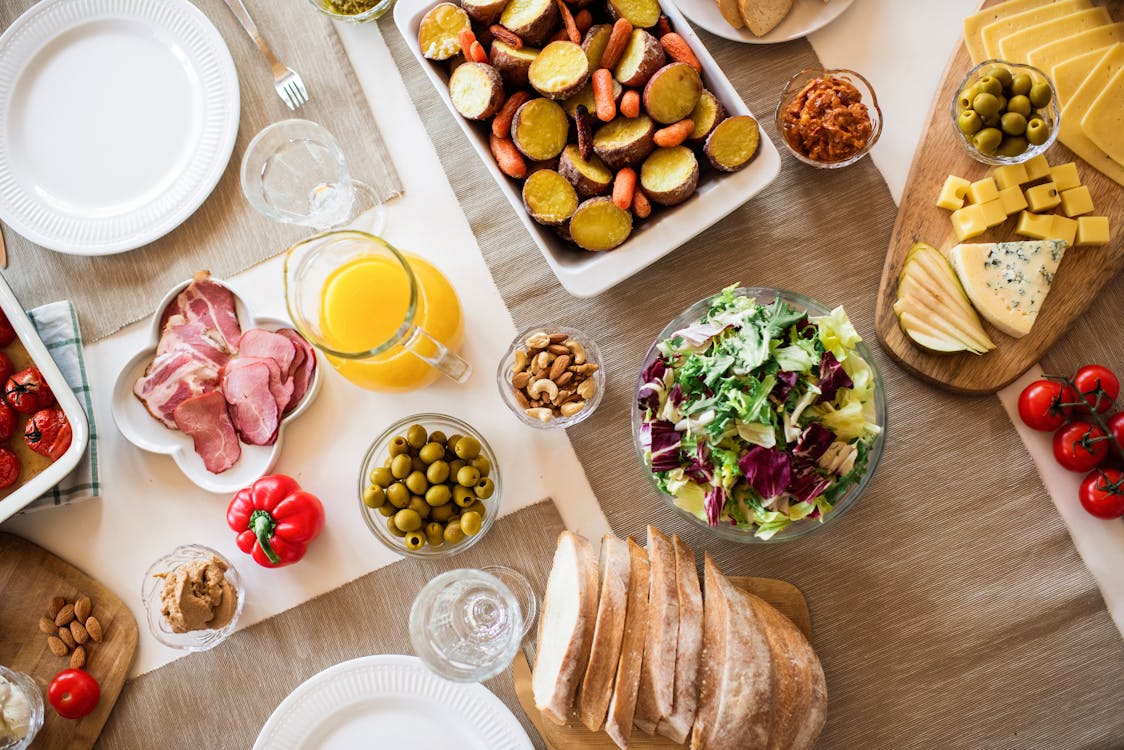
This is the part of the conversation that most aphrodisiac-food articles avoid: the actual numbers. Below are the dose targets used in the relevant clinical trials, translated into how much food you would need to consume daily to match them.
- Zinc, 11mg/day target (UK NRV): ~6 medium oysters (~16–32mg, exceeds target) · 100g lean beef (~6mg) · 30g pumpkin seeds (~2.2mg) · or one 10mg zinc tablet
- L-Citrulline, 1.5g/day (Cormio 2011): ~12–14 cups of watermelon (300g serves × 4–5), roughly 700–900 calories of mostly fructose — or one 1g citrulline supplement
- Pomegranate ellagitannins, Forest 2007 dose: 8 oz juice/day (~150 calories of fructose) — achievable but not trivial year-round — or a concentrated pomegranate extract supplement
- Cocoa flavanols, ~900mg/day (Cochrane benchmark): 100g of 70% dark chocolate delivers ~50–100mg flavanols, so 9–18 bars/day — about 5,000 calories — or a flavanol-standardised cocoa extract
- Maca, 1,500–3,000mg extract (Gonzales 2002): Concentrated dried-extract supplement only — raw maca root flour is not standardised to active alkamide content
The repeating pattern across all these foods is the same: the active compound exists in the food, but at concentrations far below the doses that produced measurable effects in clinical studies. Eat the food because it’s healthy, enjoyable and supports your overall vascular and nutritional baseline. Where the amounts in food sit far below the studied doses, that gap is worth understanding. Food and standardised supplements are simply different ways people approach these compounds; neither is presented here as superior.
Are These Foods Always Safe? Allergies, Interactions & Practical Cautions
Whole foods are, on balance, low-risk. Aphrodisiac foods are no different — oysters, pomegranate, watermelon, dark chocolate and leafy greens are eaten safely by millions. There are still a handful of practical cautions worth flagging, particularly for men over 40 who are more likely to be on prescription medication or managing chronic conditions.
- Shellfish allergy — oysters: mild-to-life-threatening allergic reactions are well documented. Iodine-allergy and shellfish-allergy are not the same condition, but anyone with seafood reactions should avoid oysters entirely.
- Gout — oysters and other shellfish: high-purine seafood can precipitate gout flares in susceptible men. Limit to occasional servings if you have a gout history.
- Diabetes / insulin resistance — watermelon, pomegranate juice, dark chocolate: all carry significant fructose or sugar load at therapeutic doses. Watermelon’s glycaemic index is around 72; 8 oz of pomegranate juice is roughly 150 calories of liquid sugar. Pair with protein/fat or stick to whole pomegranate fruit if blood glucose control is a concern.
- Cardiovascular medication — dark chocolate caffeine and theobromine: very high cocoa intakes can mildly affect heart rate. At food doses this is rarely an issue, but worth noting for men on beta-blockers or with arrhythmias.
- Anticoagulants — ginseng: Korean ginseng has been associated with reduced effectiveness of warfarin in case reports. Discuss with your GP before adding ginseng tea or supplements alongside anticoagulant therapy.
- Pregnancy — saffron and high-dose maca: saffron is contraindicated in pregnancy at high doses. While male sexual-health context is the focus here, partners trying to conceive should be aware.
- Shellfish allergy — avoid oysters, mussels, clams entirely
- Gout or hyperuricaemia — limit purine-heavy seafood
- Diabetes / insulin-resistant — be careful with high-fructose foods (watermelon, pomegranate juice)
- On PDE5 inhibitors (sildenafil, tadalafil) — high-dose citrulline-rich foods or supplements may add to vasodilation
- On antihypertensives or anticoagulants — ginseng and saffron supplementation in particular needs medical sign-off
- Cardiovascular disease — new or worsening erectile difficulty can be an early warning sign of vascular disease and deserves a GP appointment, not a kitchen fix
There is a useful distinction between food-as-medicine and food-as-pleasure. Oysters in a Mediterranean-pattern diet are food-as-medicine: zinc-dense, low-calorie, omega-3 rich. Oysters at a celebration dinner with someone you love are food-as-pleasure — and that has its own real value for intimacy that no clinical trial captures.— Blue Power Research Team, on the integrated view of nutrition and intimacy
How to Build a Practical UK Aphrodisiac-Adjacent Diet (Without Quitting Your Day Job)
The honest answer to “what should I actually eat?” is not a separate “aphrodisiac diet” — it is a Mediterranean-pattern diet with deliberate emphasis on the foods that double as vascular and nutritional support. Esposito’s 2006 Int J Impot Res trial famously showed that a Mediterranean diet improved erectile function in men with metabolic syndrome over two years (Esposito et al., Int J Impot Res, 2006) — and that diet looks remarkably similar to what we’re describing here.
- Make Mediterranean-pattern eating the base. Olive oil, fish, vegetables, legumes, whole grains, nuts. This is the most evidence-supported background diet for cardiovascular and erectile health.
- Include zinc-rich proteins 3–4× per week. Oysters when affordable; otherwise lean beef, lamb, pumpkin seeds and chickpeas. Aim for the 11mg/day NRV from food rather than worrying about megadoses.
- Eat dietary nitrates daily. Spinach, rocket, kale, beetroot. A handful of leafy greens with most meals is the easiest NO-pathway support there is.
- Use pomegranate juice in moderation. 4 oz (a small glass) three or four times a week, ideally with breakfast. Avoid 16 oz daily — the sugar load isn’t worth it.
- Treat dark chocolate as a treat. 30–50g of 70%+ chocolate after dinner is sensible; a daily 100g bar is a calorie problem in disguise.
- Food amounts vs studied doses. For zinc, L-citrulline / L-arginine, maca and Korean ginseng, the amounts in everyday food are generally well below the doses used in trials.
How Blue Power Relates to These Compounds
The dose-gap reality — and where supplements fit
Food and supplements are simply different ways to obtain these compounds. Blue Power is a transparent multi-ingredient formula; the amounts of several of these compounds in everyday food are typically below the doses used in the trials cited above.
- Zinc 10mg (100% NRV) in Blue Power — equivalent in oysters: ~6 medium per day, which in the UK is roughly £10–15 every meal. "Zinc contributes to the maintenance of normal testosterone levels in the blood." (EFSA-approved claim, Claim ID 301). "Zinc contributes to normal fertility and reproduction." (EFSA-approved claim).
- Maca Root 50mg + Korean Red Ginseng 5:1 100mg — standardised herbal extracts studied in systematic reviews for sexual function (Shin 2010; Jang 2008). Trial doses were substantially higher than amounts in Blue Power; results from those trials may not apply to this formulation.
- L-Arginine 50mg — the same amino acid the body also obtains from dietary nitrate (leafy greens) and citrulline (watermelon).
Full Blue Power formula: Oat extract (Avena sativa) 10:1 50mg · Shilajit 50mg · Maca Root 50mg · Korean Ginseng 5:1 100mg · L-Arginine 50mg · Zinc 10mg · Vitamin C 80mg. "Vitamin C contributes to the reduction of tiredness and fatigue." (EFSA-approved claim).
The realistic approach for UK men in their 30s, 40s and 50s is the practical one: eat a Mediterranean-pattern diet with deliberate emphasis on zinc, leafy greens, nuts and oily fish, with food as the foundation of a healthy lifestyle.
Try Blue Power — GMP-Certified, Fully Transparent Formula
Maca Root 50mg + Oat extract (Avena sativa) 10:1 50mg + Korean Ginseng 5:1 100mg + Zinc 10mg + L-Arginine 50mg in one daily tablet. GMP-certified, fully transparent dosing. "Zinc contributes to the maintenance of normal testosterone levels in the blood." (EFSA-approved).
Get Blue Power — Free UK DeliveryNo subscription required · 30-day supply · Free standard UK delivery
Reporting side effects. Food supplements are generally well tolerated, but if you notice an unexpected reaction to any supplement you can report it to the UK regulator through the MHRA Yellow Card Scheme. Always tell your GP or pharmacist about supplements you take, especially alongside prescription medicines.
Why Blue Power uses these doses
Blue Power is a once-daily multi-ingredient tablet, not a single high-dose extract. That is a deliberate design choice, and it explains why some ingredient amounts are lower than the doses used in single-ingredient clinical trials.
Each ingredient is included at an amount tied to its own nutritional role and to UK safe-intake limits. For example, zinc is included at 10 mg — 100% of the EU Nutrient Reference Value — which is the amount at which the authorised claim applies: “Zinc contributes to the maintenance of normal testosterone levels in the blood.” Larger amounts are not more useful: the 2020 FAZST trial found no benefit from high-dose zinc in men who already had enough, and intakes above 40 mg/day risk copper depletion.
The same principle applies across the formula. A daily supportive amount within safe limits is the goal, rather than replicating a short-term single-agent research protocol. Where a botanical is present at a lower amount than a trial used, that trial result cannot be transferred to Blue Power as a product claim — it is background evidence about the ingredient, not a promise about the tablet.
Frequently Asked Questions About Aphrodisiac Foods
Do aphrodisiac foods actually work?
A small handful do, biochemically. Oysters provide zinc — "Zinc contributes to the maintenance of normal testosterone levels in the blood." (EFSA-approved claim). Watermelon provides L-citrulline (which improved erection hardness in the Cormio 2011 trial at 1.5g/day). Pomegranate juice showed a positive but non-significant trend on erectile function (Forest 2007, p=0.058). In Gonzales et al. (2002), standardised maca extract at 1,500–3,000mg/day was associated with higher subjective sexual desire (trial dose 1,500–3,000mg/day; Blue Power contains 50mg Maca per tablet, so these trial results cannot be transferred to the product). Most other “aphrodisiac” foods (asparagus, figs, strawberries, bananas, truffles) carry their reputation from symbolism, not biochemistry. Under UK / EU law no food is allowed to make an explicit aphrodisiac claim because the evidence threshold has not been met.
Are oysters a good zinc source for testosterone and sexual desire?
Indirectly, yes. Six medium oysters provide roughly 16–32mg of zinc, far above the UK NRV of 11mg. Zinc carries the EFSA-authorised claim: “Zinc contributes to the maintenance of normal testosterone levels in the blood.” There is no direct RCT of oysters themselves on sexual desire, but the evidence chain (oysters → zinc → testosterone) is well supported. If you do not eat oysters regularly, a zinc supplement at 10mg (100% NRV) achieves the same regulatory-backed effect for a fraction of the cost.
How much pomegranate juice should men drink for ED benefits?
The Forest 2007 trial used 8 oz (240ml) of pomegranate juice daily for four weeks. The result was a positive trend (47% improved on juice vs 32% on placebo) that did not reach statistical significance (p=0.058). For practical use, 4 oz three or four times a week is a sensible compromise between the modest evidence signal and the sugar load of a daily 8 oz glass (~150 calories). Men with diabetes or insulin resistance should be cautious about daily juice intake.
Does dark chocolate improve sexual function in men?
Cocoa flavanols genuinely improve endothelial function via a nitric-oxide-dependent mechanism (Fisher 2003), and the Cochrane review supports modest blood-pressure reduction at higher flavanol doses. The problem is that the clinical-effect dose is around 900mg flavanols/day — equivalent to nine to eighteen 70% dark chocolate bars. As a daily food habit, 30–50g of dark chocolate is sensible. As a therapeutic intervention for sexual function, it is not realistic from food alone.
Is it cheaper to use supplements or eat aphrodisiac foods?
Cost varies with the compound and how you source it. UK oysters typically cost £1.50–£3 each at supermarkets, so six oysters daily works out at roughly £9–£18 (~£300/month); a 10mg zinc supplement costs pennies per day. Matching the citrulline dose from food means around 14 cups of watermelon (700–900 daily calories), while a 1g citrulline supplement is a few pounds a month. The food-only approach is feasible for one or two ingredients with a generous food budget; for several compounds at once, the food amounts add up quickly. There is no single right answer — it depends on your budget, diet and which compounds you are interested in.
Should men over 40 follow an “aphrodisiac diet”?
There is no single “aphrodisiac diet” in the medical literature. The closest evidence-supported pattern is the Mediterranean diet, which Esposito’s 2006 Int J Impot Res trial showed improved erectile function in men with metabolic syndrome over two years. The practical advice for UK men over 40 is: eat Mediterranean-pattern (olive oil, fish, leafy greens, nuts, legumes, whole grains), include zinc-rich foods 3–4× per week, eat dietary nitrates daily, and be aware that the amounts of maca, ginseng and citrulline in everyday food are generally below the doses used in trials.
The Bottom Line: Food First, Then Smart Supplementation
Aphrodisiac foods are not a myth and not a miracle. A small group of foods — oysters, watermelon, pomegranate, dark chocolate, leafy greens — contain compounds with measurable effects on the four pathways that matter for male sexual health: sexual desire, erectile vasculature, hormones and stress. Korean ginseng and maca sit in the food-and-herb crossover zone, with trial data for sexual function at extract doses well above culinary amounts. Most of the rest is folklore: pleasant ritual, useful for atmosphere and intimacy, but not biochemistry.
The practical UK strategy is the boring one. Build a Mediterranean-pattern base. Layer in zinc-rich proteins, dietary nitrates from leafy greens, modest pomegranate juice, dark chocolate as a treat. For citrulline, maca, ginseng and sometimes zinc, the amounts in everyday food are generally below clinical-trial levels — that is the honest, evidence-led picture, and everything else is marketing.
And there is one final point worth saying out loud. “Aphrodisiac” is partly about biology and partly about ritual, presence and intimacy. A bowl of oysters is more than its zinc content; a glass of pomegranate juice is more than its punicalagins. A good diet, healthy habits and connection matter most.
References & Sources (expand)
- Forest CP, Padma-Nathan H, Liker HR (2007). Efficacy and safety of pomegranate juice on improvement of erectile dysfunction in male patients with mild to moderate erectile dysfunction. International Journal of Impotence Research 19(6):564-7. PubMed 17568759
- Cormio L, De Siati M, Lorusso F, et al. (2011). Oral L-citrulline supplementation improves erection hardness in men with mild erectile dysfunction. Urology 77(1):119-22. PubMed 21195829
- Fisher ND, Hughes M, Gerhard-Herman M, Hollenberg NK (2003). Flavanol-rich cocoa induces nitric-oxide-dependent vasodilation in healthy humans. Journal of Hypertension 21(12):2281-6. PubMed 14654748
- Aldemir M, Okulu E, Neselioglu S, et al. (2011). Pistachio diet improves erectile function parameters and serum lipid profiles in patients with erectile dysfunction. International Journal of Impotence Research 23(1):32-8. PubMed 21228801
- Jang DJ, Lee MS, Shin BC, Lee YC, Ernst E (2008). Red ginseng for erectile dysfunction: a systematic review. British Journal of Clinical Pharmacology 66(4):444-50. PubMed 18754850
- Shin BC, Lee MS, Yang EJ, Lim HS, Ernst E (2010). Maca (L. meyenii) for improving sexual function: a systematic review. BMC Complementary and Alternative Medicine 10:44. PubMed 20691074
- Gonzales GF, Cordova A, Vega K, et al. (2002). Effect of Lepidium meyenii (MACA) on sexual desire and its absent relationship with serum testosterone levels in adult healthy men. Andrologia 34(6):367-72. PubMed 12472620
- Gambelunghe C, Rossi R, Sommavilla M, et al. (2003). Effects of chrysin on urinary testosterone levels in human males. Journal of Medicinal Food 6(4):387-90. PubMed 14977449
- Esposito K, Ciotola M, Giugliano F, et al. (2006). Mediterranean diet improves erectile function in subjects with the metabolic syndrome. Int J Impot Res 18(4):405-10. PubMed 16395320
- EFSA NDA Panel (2010). Scientific Opinion on the substantiation of health claims related to zinc (ID 301, testosterone claim). EFSA Journal 8(10):1819. EFSA Journal 1819
- NIH Office of Dietary Supplements. Zinc — Health Professional Fact Sheet. ods.od.nih.gov
- NHS UK. The Eatwell Guide. nhs.uk
- British Nutrition Foundation. Nutrient requirements (UK reference nutrient intakes). nutrition.org.uk
0 comments